Blog
Phytomem Ingredients: 6 Checks on Each Name in the Formula
Quick answer
Phytomem One lists six ingredients: saffron extract, fucoxanthin, fucoidan, oleuropein, berberine HCl and Ceylon cinnamon bark. How much of each sits in a tablet is not stated. Their best-known research covers mood, weight and blood sugar more than memory, so judge each name separately before you buy.
If the ingredient list suits you and your doctor raises no objection, the order page lists pack prices and the written guarantee.
See today’s price and guaranteePhytomemdaily is a retail desk, not the manufacturer, and earns money when you buy through this site.
Key facts
- The formula names six: saffron extract, fucoxanthin, fucoidan, oleuropein, berberine HCl and Ceylon cinnamon bark.
- Two of the six, fucoxanthin and fucoidan, are drawn from Japanese sea kelp.
- No amount is given for any ingredient, and no other-ingredients line was passed to us.
- An allergen statement is also absent from what we hold.
- Berberine clashes with cyclosporine, and it is likely unsafe around infants, during pregnancy and while nursing.
- Both berberine and Ceylon cinnamon have blood sugar research behind them, which is a reason to ask a doctor before starting if you use diabetes medicine.
- Each bottle has 30 tablets, and one is taken daily alongside food.
| Ingredient | Source named | Amount per tablet |
|---|---|---|
| Saffron extract | Crocus sativus L., stigmas | Not stated |
| Fucoxanthin | Japanese sea kelp | Not stated |
| Fucoidan | Japanese sea kelp | Not stated |
| Oleuropein | Olive leaf extract | Not stated |
| Berberine HCl | Plants such as barberry and goldenseal | Not stated |
| Ceylon cinnamon bark | Cinnamomum verum | Not stated |
What do the Phytomem One ingredients look like on paper?
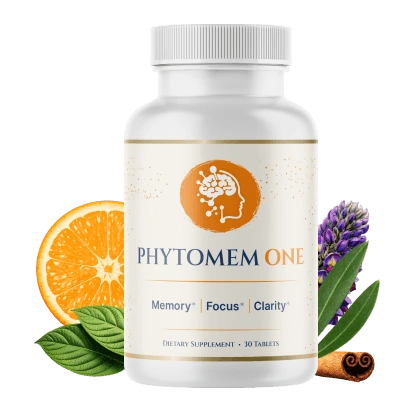
Six names without a single number. The bottle and the seller's listing graphic repeat the same six: saffron extract, fucoxanthin, fucoidan, oleuropein, berberine HCl and Ceylon cinnamon bark.
They are presented as one blend with no figure beside any member. A pinch and a full studied dose would therefore look identical on the page we hold. The checks below take the names one at a time and ask the same two questions of each: what is it known for, and what is the catch?
Check 1: what is saffron extract known for, and does it touch memory?
The spice comes from the dried stigmas of a crocus flower. The human trials people quote looked at mood, mainly depression symptoms, not recall. The Defense Department's supplement safety program calls the evidence on effectiveness and long-term safety insufficient, and notes that extracts of 20 to 100 mg may help depression symptoms while bigger trials are awaited (Operation Supplement Safety, accessed 2026).
So for anyone searching saffron and memory, the honest reply is that this research does not cover it. Pregnant women are told to avoid saffron supplements, and 5 g or more brings on vomiting and dizziness.
Check 2: which fucoxanthin benefits does this label back up?
Fucoxanthin is a pigment from brown seaweed, here from Japanese sea kelp. Most of its commercial use is in weight-loss products, a field where little is known about how well most ingredients perform (NIH ODS, 2026).
No memory benefit is published for fucoxanthin in this tablet. The practical catch is iodine. Kelp holds it, the adult ceiling is 1,100 mcg daily, and high intakes can inflame the thyroid (NIH ODS, 2024). The iodine per tablet is not stated.
Check 3: what is fucoidan?
A carbohydrate drawn from the same sea kelp. Most work on it comes from cells and animals, human evidence in healthy adults is sparse, and no federal consumer fact sheet covers it.
Since it comes from the same seaweed, the iodine point from the previous check applies again. Anyone with a thyroid condition should talk to a doctor before starting.
Check 4: what is oleuropein?
The bitter compound that gives olive leaves their sharp taste, sold here as olive leaf extract. Small human studies on blood pressure and blood sugar make up most of the work so far. No federal fact sheet profiles it, so treat the evidence as thin.
How it behaves alongside prescription drugs is poorly known. If a prescription for blood pressure or blood sugar is part of your day, tell your clinician before the first tablet.
Check 5: what does berberine HCl do, and who should stay away?
Barberry, goldenseal and related plants supply berberine, a yellow compound. It is researched for blood sugar and weight. NCCIH cites a 2022 analysis that found lower weight and BMI, while cautioning that many of the underlying studies carried a high risk of bias (NCCIH, 2023).
It also carries the heaviest warnings in the bottle. It interacts with cyclosporine. In infants it has been linked to a harmful build-up of bilirubin, so it is likely unsafe for them and may be unsafe during pregnancy or nursing.
Check 6: what is Ceylon cinnamon bark, and can saffron and berberine be combined?
Ceylon cinnamon is the true, low-coumarin kind, unlike the cassia cinnamon in most spice jars. In studies of people with prediabetes or type 2 diabetes, cinnamon supplements were tied to lower fasting blood glucose and insulin resistance, though study quality varied (NCCIH, 2023).
On saffron and berberine together, no study of that pair inside this tablet reached us. What we can say is that berberine and cinnamon both push in the blood sugar direction. Herbal products taken with diabetes drugs can cause unwanted effects, so ask first.
What does the ingredients list leave out?
A good deal. With no other-ingredients line, binders, coatings and colors are unknown. With no allergen statement, the gluten-free, dairy-free and vegetarian seals on the images cannot be checked. No maker is named.
These blanks explain why we keep telling readers to check the panel on the bottle they receive. If it prints amounts, the picture changes, and we will update our pages when a reader sends one.
Frequently asked questions
Which ingredients does Phytomem One contain?
The formula lists saffron extract, fucoxanthin, fucoidan, oleuropein, berberine HCl and Ceylon cinnamon bark. Two come from Japanese sea kelp. Nothing about binders or coatings reached us.
What quantity of each ingredient sits in a tablet?
No quantity is stated. We were given no Supplement Facts panel, so no milligram figure exists for any of the six, and we will not estimate one.
Is any classic memory ingredient in the formula?
None of the six counts as a classic memory ingredient. Their best-known research covers blood sugar, weight and mood, and that mismatch is the most useful fact to hold before buying.
Is Phytomem compatible with diabetes medicine?
Ask your doctor first. Berberine and Ceylon cinnamon are both studied for blood sugar, and NCCIH warns that herbal products taken together with diabetes drugs may have unwanted effects.
Is the formula suitable with a thyroid condition?
Check with a doctor first. Sea kelp supplies two of the six, kelp contains iodine, and the iodine per tablet is not published.
Can I trust the gluten-free and vegetarian seals?
They are seal claims printed on the images. With no allergen statement or other-ingredients line to check them against, this site cannot confirm them. Anyone with an allergy should read the bottle and ring +1 (302) 200-3480.
References
- National Center for Complementary and Integrative Health (2023). Berberine and Weight Loss: What You Need To Know.
- National Center for Complementary and Integrative Health (2023). Diabetes and Dietary Supplements: What You Need To Know.
- Operation Supplement Safety, U.S. Department of Defense (accessed 2026). Saffron in dietary supplements.
- NIH Office of Dietary Supplements (2024). Iodine: Fact Sheet for Consumers.
- NIH Office of Dietary Supplements (2026). Dietary Supplements for Weight Loss: Fact Sheet for Health Professionals.
Our view
Naming all six ingredients is a fair start, and we credit it. The trouble comes after the names: no amounts, no other ingredients and no study of the finished tablet.
If you still want to try it, read the berberine cautions first, then the kelp and diabetes points, and study your own panel before the first tablet.
Medical note: Phytomem One is a dietary supplement. It is not FDA approved, and no supplement is. It is not intended to diagnose, treat, cure, or prevent any disease. Ask your doctor about any medical question, and about any medicine you take, before you use it.
Related reading:
- 7 things to read on the Phytomem label
- 7 safety checks before the first tablet
- Phytomem ingredients page
Last updated . Medically reviewed by Dr. Jonathan Kropski, MD, Physician.
When you are ready
Check the current pack prices and the guarantee
The panel on your own bottle is the document that counts. The order page lists today's pack prices and the guarantee wording.
Phytomemdaily is a retail desk, not the manufacturer, and earns money when you buy through this site.